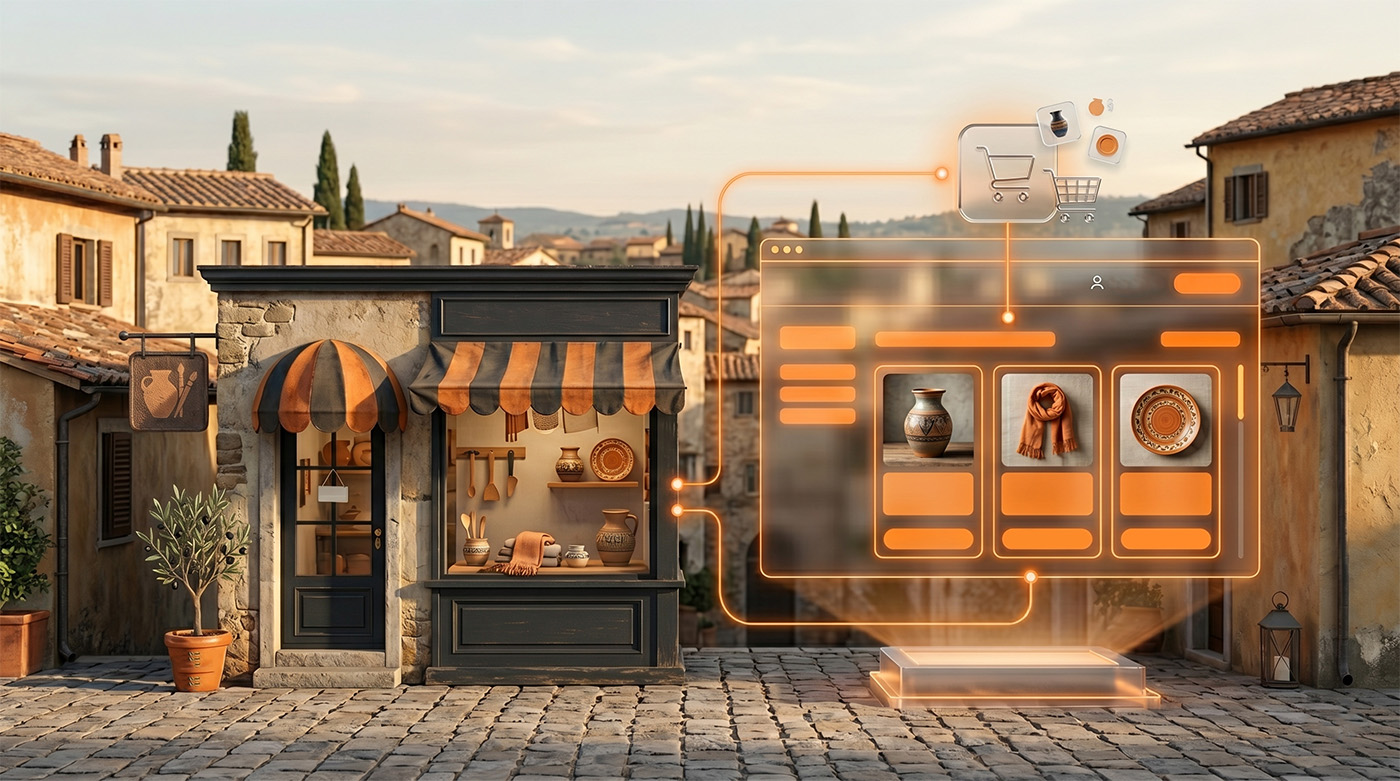
Have you ever wasted an hour hunting for a document across dozens of Excel folders? Or had to enter the same data by hand into three different systems? If the answer is yes, your company probably needs custom business software. App and business software development in Rome is growing 23% year over year, because small businesses are discovering that automating processes is no longer a luxury but a necessity.
A custom application can completely change the way you manage customers, inventory, invoicing and internal communication. But how do you choose the right partner in the capital?
Why Roman companies choose custom software
Rome is home to more than 280,000 active businesses, many of which are leaving Excel spreadsheets behind for integrated digital solutions. The reason is simple: custom business software can cut operating time by up to 40% and human error by 85%.
In our experience, companies that decide to invest in a custom app in Rome do so for three main reasons. First: off-the-shelf software doesn’t fit their specific processes. Second: they want to centralize data that’s currently scattered across dozens of files. Third: they need to automate repetitive tasks that waste valuable hours every day.
Take the case of a Roman real estate agency that managed 500 properties with Excel and WhatsApp. After developing custom software, they cut the time needed to publish a listing from 15 minutes to 2 minutes, and they can now automatically track every contact and viewing.
The most requested types of business applications in Rome
The business software market in Rome is mainly concentrated in five categories. Custom CRMs account for 35% of requests, followed by inventory management systems (28%) and integrated invoicing platforms (22%).
What we often see is companies starting with one specific need (perhaps automating customer management) and then realizing they could also integrate inventory, accounting and internal communication. A modular approach lets you start with your core business and add features over time.
Business software for retail and restaurants
In Rome’s retail sector, the most common request is integrating the physical store with e-commerce. A system that automatically syncs inventory, prices and promotions can increase sales by 18% in the first six months.
In the restaurant industry, most of the requests we receive involve integrating appointment and booking systems. These solutions are designed to automate table reservations, letting customers book on their own based on the restaurant’s opening hours.
This kind of tool significantly increases the perceived value of a restaurant, especially when it’s integrated directly into the website, where many restaurants also choose to add an interactive digital menu. That choice brings concrete benefits: the restaurant no longer has to rely on outside services or pay for printing paper menus, and can manage everything itself, very simply, through a QR code.
A digital menu also lets you showcase each dish with eye-catching images, a detail that sparks curiosity and encourages customers to order.
Applications for professional services
Law firms, accountants and consultants often ask for case management systems that integrate calendar, invoicing and document storage. This kind of app development in Rome can cut administrative time by 50%.
If you’d like the full picture of how we approach custom app and business software development (technologies, process, price ranges and typical timelines), we’ve dedicated a page to the service.
The cost of app and business software development in the capital
How much does it cost to develop a business application in Rome? Prices vary significantly with complexity, but we can outline some indicative ranges to help you get your bearings. For a full analysis of costs and ROI, we’ve written a guide on how much custom business software costs in Rome.
Basic business software (customer management + invoicing) starts at €5,000. More complex systems that integrate inventory, accounting and advanced reporting can reach €30,000. Enterprise applications with multiple integrations and advanced features exceed €50,000.
A common mistake we see is comparing only the upfront prices without considering maintenance, updates and technical support. A serious development agency should provide a post-launch support plan that includes backups, security updates and technical support.
How to choose the right development partner
Rome has hundreds of agencies and freelancers offering software development services. How do you tell the professionals from the snake oil salesmen? There are a few indicators that never lie.
First of all, ask to see projects similar to yours. Not screenshots of demos, but real applications used by real clients. A serious agency will have a portfolio of case studies with measurable results. The second criterion is the working method. Be wary of anyone who promises unrealistic timelines or doesn’t involve you in defining the requirements.
When you choose a partner for app and business software development in Rome, consider location as well. Having a local team makes communication, alignment meetings and post-launch support easier. If you’d like to learn more about evaluating the skills of a web agency in Rome, consider factors such as industry experience and a consultative approach.
Development technologies and timelines
The technologies most commonly used for business software include modern web frameworks such as React or Vue.js for the user interface, and relational databases such as PostgreSQL for data management. Development times range from 2-3 months for simple projects to 8-12 months for complex systems.
Post-launch support and maintenance
Imagine you’ve just launched your new business software and, a week later, the invoicing system freezes. Without a proper support plan, you could find yourself in serious trouble. 73% of companies that invest in custom software consider technical support the most important factor after product quality.
A good maintenance contract includes 24/7 monitoring, automatic daily backups, monthly security updates and technical support with a guaranteed response time. Costs range from 15% to 25% of the initial project value per year.
In our experience, companies that underestimate this aspect often end up having to switch providers after a few months, with significant additional costs for migration and staff retraining.
Frequently asked questions
How long does it take to develop custom business software?
Timelines range from 2-3 months for simple projects (a basic CRM) to 8-12 months for complex systems with multiple integrations. The analysis and requirements phase generally takes 2-4 weeks.
Does custom business software cost more than off-the-shelf software?
The upfront investment is higher (€5,000-50,000 vs €50-500/month), but custom software eliminates monthly subscriptions and multiple licenses, making it cheaper in the long run for established companies and, above all, tailored to your specific needs.
Can I integrate the software with my existing systems?
Yes, APIs make it possible to integrate CRMs, accounting systems, e-commerce stores and other software. Integration requires a preliminary technical analysis and can extend development time by 20-30%.
What happens if the agency that developed the software closes down?
It’s essential to ask for the source code and the technical documentation. A well-structured contract should include continuity clauses and the transfer of the project if the business ceases operations.
Can I change the software after launch?
Absolutely. Custom software is designed to evolve. Changes can be rolled out through scheduled updates, with costs that vary depending on the complexity of the new features you need.
Do you need a custom app or business software?
We’ll review your processes together and propose the solution that best fits your needs. No commitment, just professional advice.