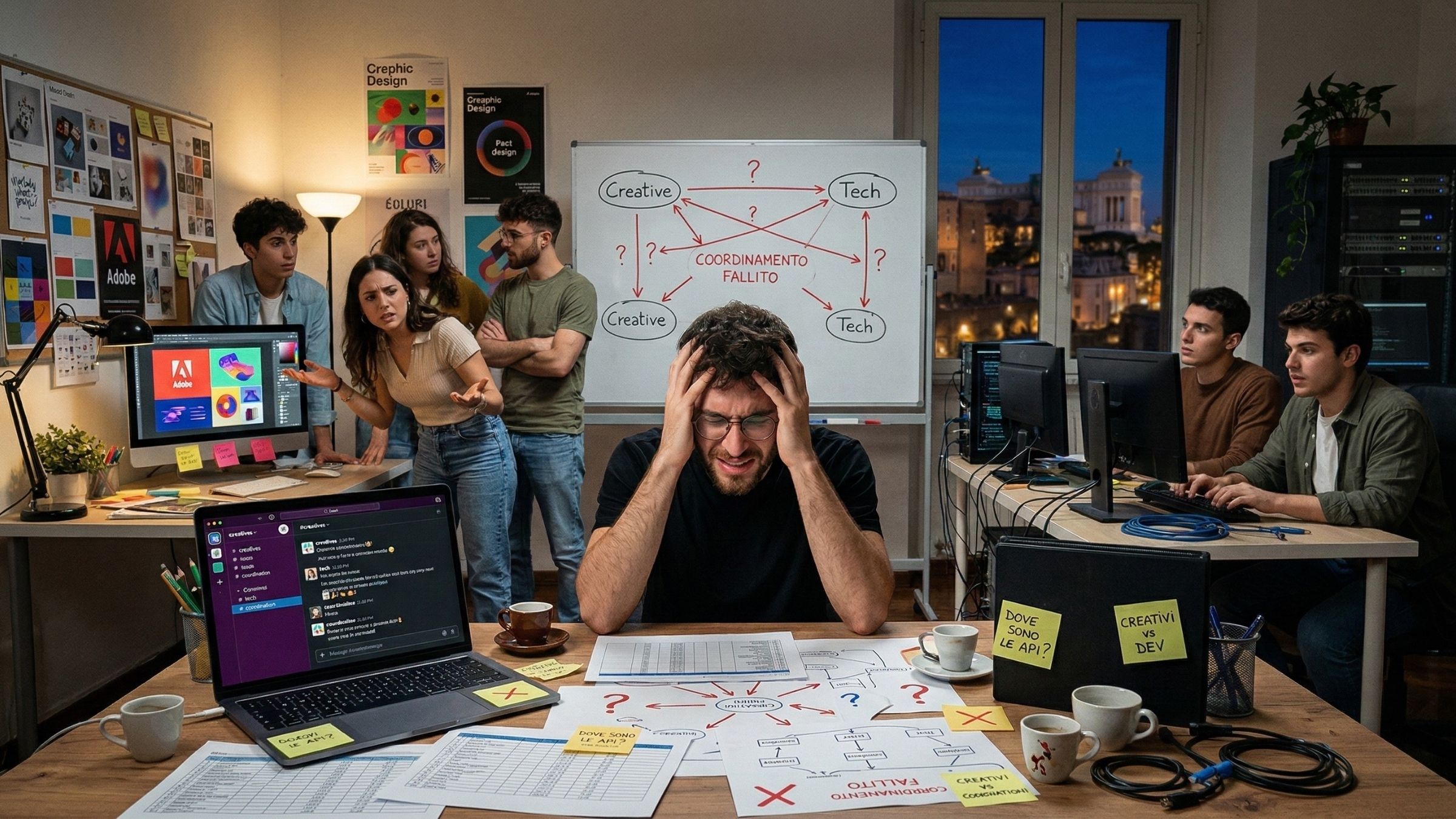
You run a creative marketing agency that’s doing well, but every time a website request comes in, you face the same dilemma: try to build it in-house or turn the project down? If you’re reading this, you’ve probably already realized that building websites in-house may not be the best strategy for your creative agency.
The reason is simple: creative work and development are two deeply different skill sets that call for completely different mindsets, tools and timelines. And trying to handle both can undermine what you do best.
The hidden costs of in-house development
When you think about hiring a developer, all you see is the salary. But the real costs are much higher. A senior developer costs around €45k a year in salary, plus payroll contributions, vacation, sick leave, ongoing training and tools.
And there’s more. In our experience with partnerships, we’ve seen agencies underestimate how much time managing development takes. Coordinating a mixed creative and tech team requires specific management skills. Every project becomes harder to plan and keep under control.
The real problem is utilization. If you don’t have a steady stream of web projects, your developer risks being underused. And when they’re not working on billable projects, they’re pure cost.
Technical skills vs. creative skills: two different worlds
Creative work runs on insights, iterations and sudden changes of direction. Web development requires structured methodologies, systematic testing and precise documentation. These two approaches struggle to coexist in the same workflow.
A concrete example? The client asks for a design change once the project is already underway. For the creative team, that’s normal: you tweak, refine and polish. For the developer, it means rewriting parts of the code, testing again and checking compatibility. Time and costs multiply.
What we see more and more often is excellent creative agencies ending up producing technically mediocre websites, or the other way around. It’s rare to excel at both at the same time.
The problem of scalability and timelines
Your agency grows when it can multiply projects without multiplying resources at the same rate. With in-house development, that kind of scalability becomes much harder.
Web projects run on timelines that rarely line up neatly with creative ones. While the creative team can work on several projects in parallel, development requires sequential focus. The result? Constant bottlenecks and clients left waiting.
Don’t underestimate how long testing and debugging take. What looks finished from a creative standpoint often still needs days of technical work before it’s truly ready to launch.
The advantages of the partnership model
Working with a dedicated technology partner lets you stay focused on what you do best: creative work, strategy and client relationships. The partner handles everything technical, from specs to deployment.
The financial benefit is immediate: you turn a fixed cost (salary + management) into a variable cost tied to projects. You only pay when you bill. And you can apply your markup to the partner’s services, keeping the margins you want.
But the biggest benefit is specialization. Your partner lives and breathes web development, knows all the latest technologies, has proven processes and handles dozens of similar projects. You focus on the strategic and creative side, where clients truly recognize your value.
How to structure an effective partnership
A good partnership isn’t just subcontracting the dirty work. It’s building an extended team where everyone excels in their own field. The secret lies in communication and shared processes.
In our experience, the partnerships that work best are the ones where roles, timelines and responsibilities are clearly defined from the start. You manage the client relationship, the briefs and expectations. The technical partner takes care of analysis, development and deployment.
One key point: choose a partner who understands your business. Not every developer is cut out to work white label with creative agencies. You need someone who respects your timelines, the way you communicate with your clients and your brand identity.
Your business’s online visibility also depends on how well you can get found on Google, which takes specific technical skills that the right partner can handle for you and your clients.
Frequently asked questions
How much does it cost to keep an in-house developer at an agency?
On top of an average annual salary of €45k, there are payroll contributions, tools, training and management. The real cost often exceeds €70k, with no guarantee they’ll be fully utilized.
How do I choose the right technology partner for my agency?
Look for a partner with white label experience, structured processes and a real understanding of the creative business. They need to respect the way you communicate with your clients and your quality standards.
Can I keep the same margins with an outside partner?
Yes, by applying your markup to the partner’s services. Margins often improve, because you eliminate fixed costs and inefficiencies. The partner has economies of scale you couldn’t reach on your own.
Will my client notice that I don’t develop in-house?
Not with a well-structured white label partnership. The client always deals with you. The partner stays invisible, working to your standards and in line with your communication.
How long does it take to set up an effective partnership?
A well-structured partnership can be up and running in 2-3 weeks. It takes time to align processes, define workflows and test communication on a first pilot project.
Want to explore a partnership for your web projects?
Let’s talk about how we can support your agency with white label solutions. No commitment, just a look at the opportunities.